
Why Keyword Targeting on YouTube Is Costing You Brand Safety and Recall
4 Minutes Read
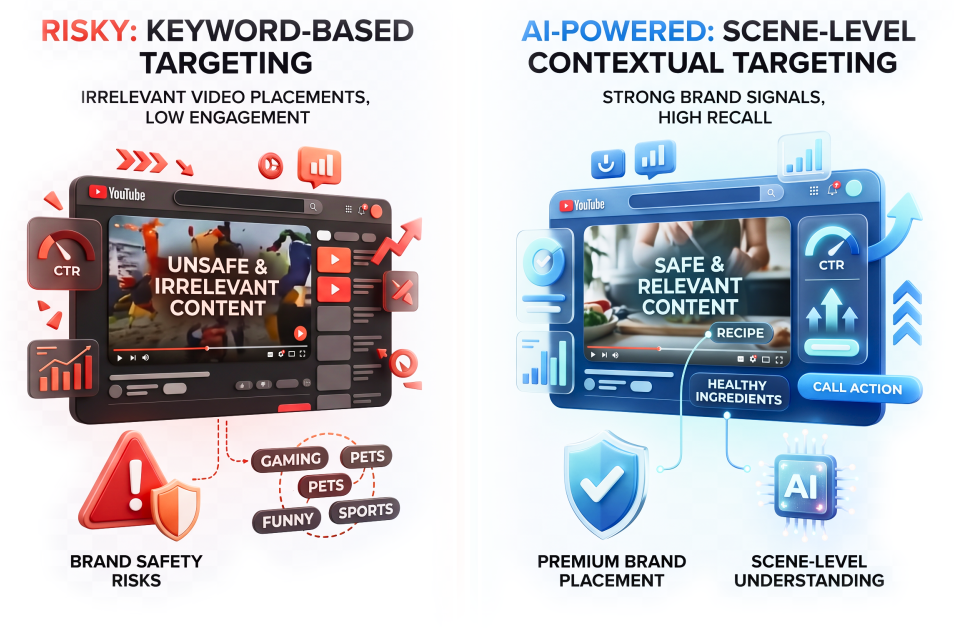
Most brands running YouTube campaigns today rely on keyword targeting to control where their ads appear. It feels logical. Pick the right keywords, exclude the dangerous ones and your ad should land in the right place.
Except it doesn't work that way.
Keyword targeting reads titles, tags and descriptions. It does not understand what is actually happening inside the video. A video titled "Best Family Road Trips 2026" could contain a heartbreaking moment between passengers, unsafe driving footage or product placements for a competitor. Keywords see the text. They don't see the content.
This creates two problems that quietly drain your budget and brand equity.
The first problem is false safety. Your exclusion list blocks words like "violence" or "controversy." But a documentary about wildlife conservation might never trigger those keywords, while still containing graphic footage of poaching that your luxury brand has no business appearing next to. Keywords lie by omission. Context is what the viewer remembers.
The second problem is false exclusion. Keyword targeting routinely blocks entire categories like "news" or "politics" to stay safe. In doing so, you eliminate millions of perfectly brand-safe videos. A news segment about a community celebration, a positive economic forecast, a heartwarming local story. All blocked. Your reach shrinks, your CPMs rise and you're paying more to show up in fewer places.
The result is a targeting approach that is simultaneously too loose (letting unsafe content through) and too tight (killing safe reach). You get the worst of both worlds.
What does scene-level intelligence change?
Instead of reading metadata, tags, scene-level AI watches the video the way a human would. It processes every frame, detecting what is on screen (objects, faces, text overlays, logos), what the audio conveys (tone, sentiment, intensity) and what emotional state the content creates (joy, tension, calm, excitement).
This means ad placement decision is based on what the viewer is actually experiencing at the moment your ad appears. Not what a creator typed three weeks earlier.
The brand recall impact is measurable.
A cooking video featuring a celebrity chef making comfort food for a family? That's a contextual match for a food brand. A cooking video where someone burns a dish and has a meltdown? Same keywords. Completely different context. Scene-level intelligence tells them apart. Keywords cannot.
The brand safety impact is structural.
Instead of maintaining a constantly outdated exclusion list, scene-level analysis scores every video in real time against your specific brand suitability parameters. Not generic "safe vs unsafe" categories, but custom rules: "Does this content match our brand's tone of optimism and aspiration?" That is a fundamentally different question than "Does this video title contain the word violence?"
For brands still relying on keyword targeting for YouTube, the question isn't whether you're wasting budget. You are. The question is how much you're leaving behind while paying more for it.